
How Coins Get Their Grades: PCGS and NGC
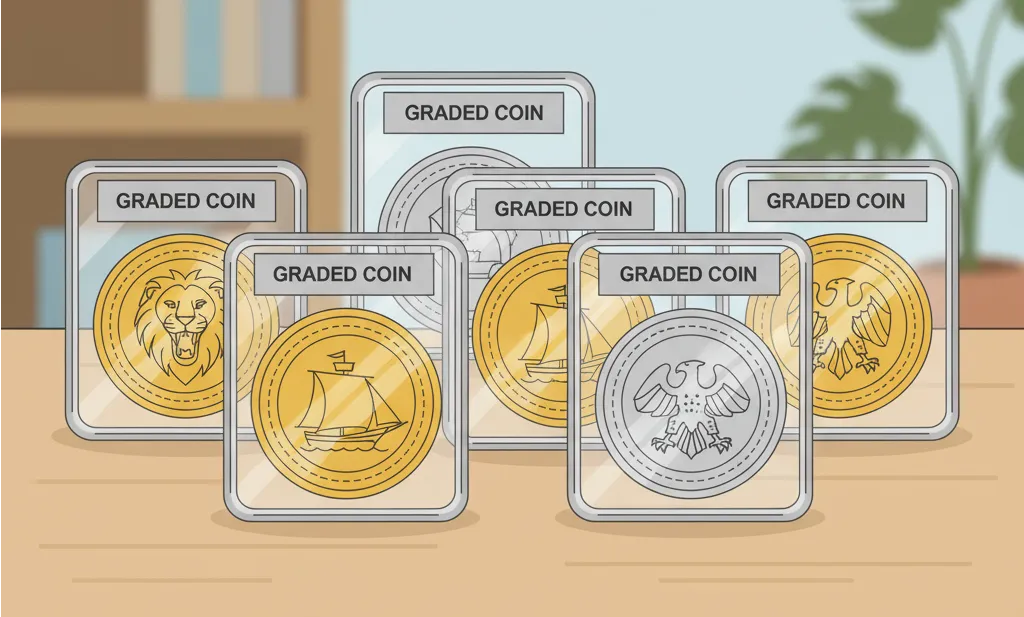
Both PCGS and NGC do the same basic job — carefully examine the coin, assign it an official rating from 1 to 70, make sure that the coin is real, and then place it in a special plastic holder called a slab, a transparent box that cannot be opened without breaking it.
This whole process makes it easier to find coins. The coin is easy to understand and inspires the trust of any buyer around the world.
But if you don't think that your collection is a huge rarity, then you can use a coin value checker for free and find out all the details of the tokens yourself.
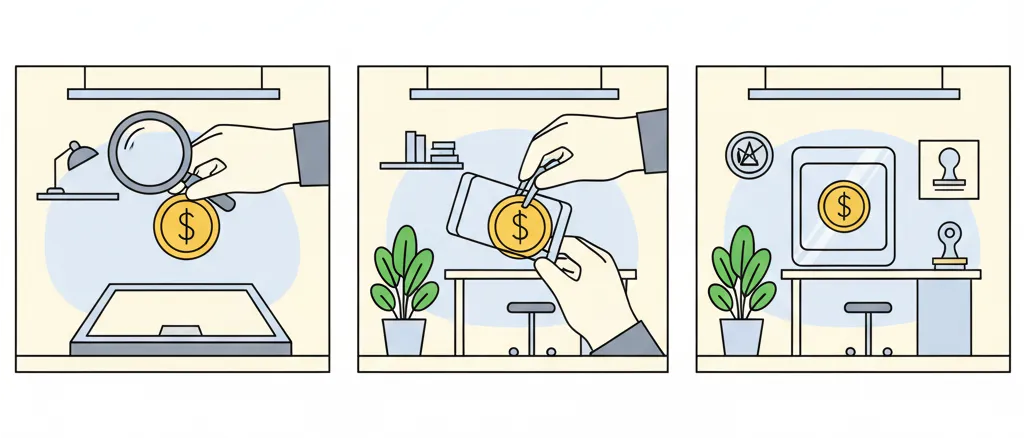
Why Grading from PCGS and NGC is Important
Imagine you want to buy a very old painting, you would never just believe the seller saying it is in good condition, you would call an expert providing an official paper about the painting, the role of this expert for coins is played by PCGS and NGC.
Trust and Standard Rules
Now things are simple, with the slab saying "MS-65", that coin is "MS-65" for everyone everywhere, this number works like a single, worldwide language for coin condition.
Protection from Fake Coins
This part is very important for all collectors, the companies promise the coin they put inside the slab is real, hiring the best experts who can find even the smartest fake coins.
The plastic box has a serial number and a barcode, allowing you to check the coin on the company's website, giving buyers more confidence.
Price and Selling Speed
A coin kept inside a PCGS or NGC slab always costs more money and sells faster than the same coin without a grade, because the buyer is sure about the quality and the coin being real.
The grading process makes the coin liquid, meaning it is fast and easy to turn into cash. A higher grade (closer to 70) means a higher price, making the coin very valuable.
The Step-by-Step Grading Process
Sending the Coin
The person fills out a long form, listing all their coins, writing down the coin type, and choosing how fast they want the grading finished.
For every coin, a fee must be paid, this grading fee depends on the coin's value, a more expensive coin needs a higher fee because the company takes a bigger risk if the coin is lost or if they make a mistake.
The coins are packed with great care, usually put into special soft bags or holders, stopping them from getting scratches while traveling.
The coins are sent to the safe storage rooms of PCGS or NGC, using a very safe and insured delivery service, keeping everything secure.
Entering the Storage
Workers open the package and check the coins against the list.
Each coin is taken from its bag, put into a small plastic holder, and given only a number. None of the people giving grades know who owns the coin, this is done to keep things fair: the grader must not know if it belongs to a rich dealer or a new collector, judging only the coin itself.
The coin is cleaned of dust and sent to a special room having high security.
Checking if the Coin is Real and What Type It Is
They check the metal, the weight, the thickness, and how the coin was made, knowing all the signs of fake coins.
The coin is checked for signs of forced cleaning, colour change, or attempts to hide damage. A coin cleaned using strong methods may not get a grade at all or only a low grade with a note "Details", greatly lowering its worth.
The exact year, the special type for example, "1878 special strike with seven tail feathers of the eagle", and the place where it was made are found.
The Sheldon Grading Scale
70: This is the highest grade possible, the coin must be perfect, having no scratches at all, showing no wear, and keeping a perfect shine.
MS (Mint State) Condition from the Mint (60–70): The coin has not been used for buying things, looking new, having just left the machine.
MS-60: The coin is new, but having many small scratches getting there from packing or storage.
MS-65: This is "Gem Uncirculated". The coin is very beautiful, shining nicely, but showing only a few small, hard-to-see defects, this level being loved by many collectors.
MS-69: Almost perfect, having a very, very small defect that is difficult to find.
PF Polished Die: This is not a condition but a way of making the coin, these coins being made specially for collectors, often having a mirror-like background and a dull design, also graded from PF-1 to PF-70.
AU Almost Not Used (50–59): The coin was used for a very short time, having small signs of wear or rubbing on the highest parts.
XF Very Good (40–49): The coin was used, but the design is still sharp, showing all the small details.
VF Very Decent (20–39): The coin was used for a long time, some small details being gone, but the main lines of the design are still easy to see.
F, VG, G, P (1–19): Coins showing heavy wear, having been used for tens of years.
But for the initial assessment, you can easily use the coin identification app as a Coin ID Scanner to find out the grade of your token in a couple of seconds.
What Graders Look For on a Coin
Wear and Damage
If the coin was in a pocket, showing the hair on the head of Liberty or the eagle's feathers worn down, it is not MS anymore, getting a low grade right away.
All signs of damage coming after the coin was made lower the score. Being deeper and easier to see, they make the grade worse. An MS-70 coin shows no such marks at all.
Quality of Making
The design looks blurry, not sharp, like it was not fully pressed, this can lower the grade from MS-65 to MS-62.
The design is sharp, all the lines are deep, everything being visible in small detail, this makes the grade higher and can add a special letter, for example, "FB" on a Mercury Dime coin, meaning the bands on the bundle of rods are clearly visible, which is rare.
Luster
A coin not used for buying things and kept perfectly still keeps this shine. If someone cleans the coin, this shine goes away, and the graders will see this.
Any rubbing, touching with fingers, or cleaning lowers the brightness and the way the shine looks, greatly affecting the MS grade.
Color and Patina
If someone tried to change the coin's colour with chemicals, the graders will notice and will not give the coin an MS grade.
Deep Mirror Prooflike is a special, much-wanted note, meaning the coin's background shines like a mirror, even if the coin is not a Proof quality coin.
Overall Look
This is a somewhat personal rule, but it is very important. Two coins can have the same bad marks in their grade, but one can look much prettier and brighter than the other.
If all the coin's defects are in places hard to see, and the coin's general look is clean, this can raise the final grade a bit.
If a big, ugly scratch is right on the face of Liberty, then even with a good strike, the coin can get a lower grade.
Putting the Coin in the Slab
The coin is placed inside a special, airtight, clear plastic slab. This plastic does not have chemicals that can hurt the coin. The slab keeps the coin safe from dust, dirt, fingers, and most importantly, from getting more wear.
A small paper label is put inside the slab, on which all the most important things are written:
The Grade: (For example, MS-64)
The Year and Type of Coin: (For example, "1881-S Morgan Dollar")
Special Notes: (For example, "DMPL" or "PL" — Prooflike, meaning looking like a Proof coin)
Unique Number: This is a serial number, letting anyone check the coin in the company's big database.
Why Is the Slab so Important?
The slab being whole means the coin has not been cleaned or scratched, staying in the same condition as when it was graded. A broken slab means the grade is not valid.
Sending Back to the Collector
All the coin's facts go into the PCGS and NGC online database right away. Any person anywhere can type in this number and see a picture of the coin and its grade, giving total clarity to the market.
Both PCGS and NGC give a money back promise for their grades. This means that:
If the coin is fake: And this is found out later, the company will pay you its market value.
If the grade was wrong: For example, a coin graded MS-65 really only deserves MS-62, the company will pay you the difference in the coin's cost.
This strong promise is one more reason why collectors trust these two companies completely.