
What Collectors Notice First About a 1906 Indian Head Penny
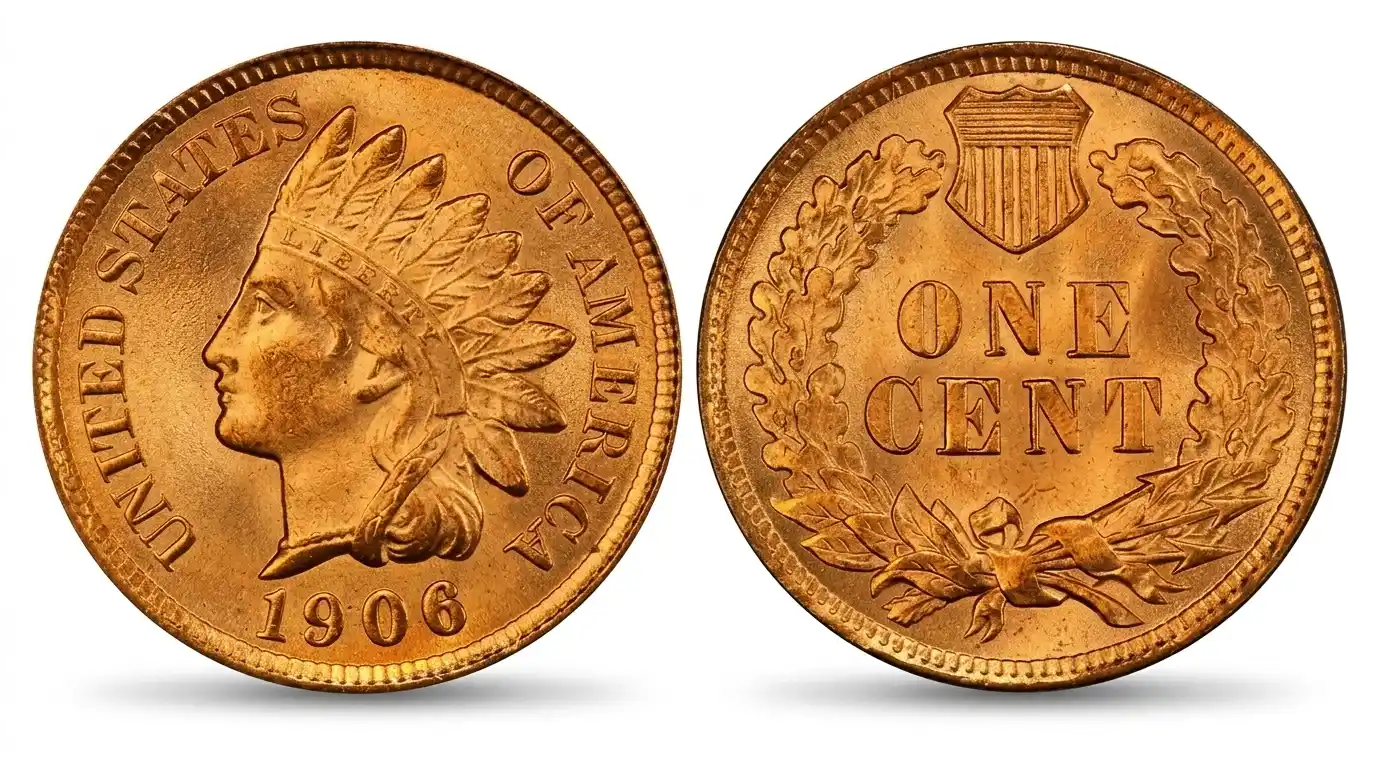
Numismatic collecting requires understanding basic principles regarding condition assessment.
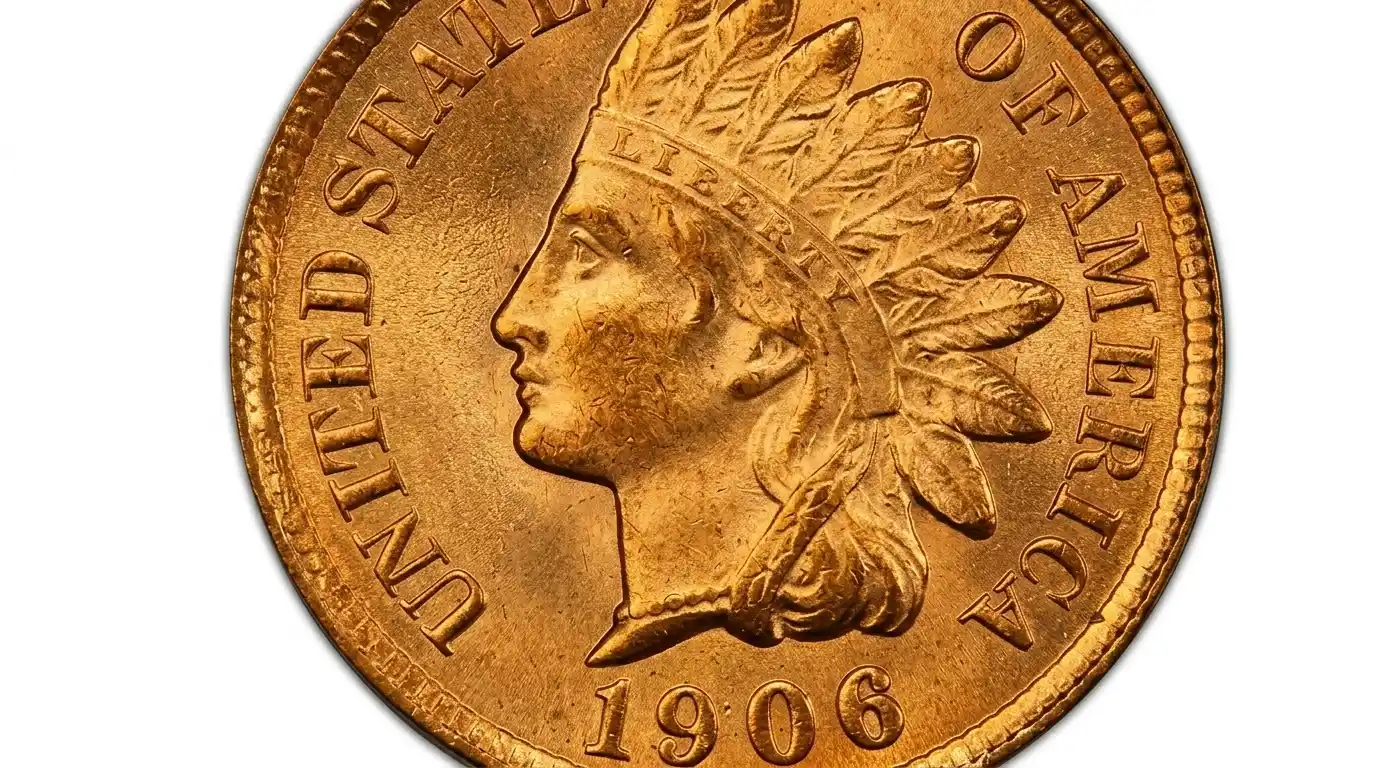
Surface color, strike sharpness, and preservation of original details instantly determine market appeal.
Each parameter influences the final value of the 1906 Indian Head Penny coin.
Lacking artistic descriptions, this text focuses strictly on factual evidence.
Coin Parameter | Technical Value |
Total mass | 3.11 grams |
Planchet diameter | 19.05 millimeters |
Composition | Copper 95%, Tin and Zinc 5% |
Edge type | Plain |
Mintage total | 96020000 pieces |
Meeting these indicators remains mandatory for recognizing the coin as authentic.
Deviating from mass standards indicates production errors or die wear.
Surface Visual Evaluation
Categorizing surface condition requires understanding copper color graduation.
Experts identify three primary color states.
Brown (BN): Brown coverage on 95% of the surface
Red-Brown (RB): Combination of red and brown shades
Red (RD): Full retention of original copper color on 95% of the surface
Coins falling into the Red category possess the highest market value.
Losing shine happens because of chemical copper oxidation.
Original mint luster, remaining after exiting the press, serves as a determining value factor.
Attempting to clean surfaces using abrasive agents permanently destroys market potential.
Strike Sharpness Analysis
Detail sharpness defines the preservation class during Sheldon scale grading.
Collectors inspect key zones featuring the lowest relief height.
Inspection zones:
Headdress feathers
Liberty inscription on the headband
Reverse wreath leaves
Wearing in these areas signals prolonged time in circulation.
Maximum detail on feathers, visible without magnification, indicates high preservation.
Poor detail definition despite surface shine indicates low-quality production processes.
Such items command lower values compared to perfectly struck coins.
Market Price Dynamics 2024-2026
Coin values fluctuate based on demand for rare, high-preservation items.
Preservation Category | 2024 price | 2025 price | 2026 price |
MS63 Brown | $55.00 | $62.00 | $72.00 |
MS64 Red-Brown | $120.00 | $145.00 | $175.00 |
MS65 Red | $450.00 | $540.00 | $650.00 |
MS66 Red | $1200.00 | $1500.00 | $1900.00 |
Stable value growth confirms investment appeal for coins in the Red category.
Common coins in states below MS60 show no value growth.
Data relies on results from major auctions.
Minting Features and Probable Errors
Production defects occur rarely, creating unique varieties for collectors.
Die Clash Errors
Accidental collision of obverse and reverse dies without a planchet leads to image transfer.
Ghostly outlines of opposing side details appear on the coin field.
Items showing pronounced Die Clash possess values significantly higher than standard coins.
Market price for such a coin in good condition reaches $300.00.
Off-Center Strikes
Misaligning the planchet during the press strike causes empty field appearances.
Price value depends on the percentage of misalignment.
10% misalignment adds $50.00 to the total value.
50% misalignment increases the price to $800.00.
Professional Certification Procedure
Expertise requires contacting specialized companies.
Certification guarantees authenticity and compliance with claimed preservation levels.
Examination stages:
Authenticity check of metal composition
Microscopic surface analysis
Grade determination using Sheldon scale
Sealing in protective plastic holders
Possessing a certificate allows selling coins quickly at auctions.
Certification service costs must align with potential coin values.
Sending cheap items for expertise proves economically unfeasible.
So, you can just use free coin apps.
Coin Storage Requirements
Preserving copper coins requires adhering to strict environmental rules.
Interacting with aggressive environments accelerates copper oxidation processes.
Threat factors:
High humidity
Presence of sulfur compounds
Mechanical friction against surfaces
Using capsules made from neutral plastic prevents patina development.
Materials containing polyvinyl chloride cause green residue buildup.
Storing coins in dark places minimizes ultraviolet radiation influence.
Maintaining temperature control extends surface preservation.
Economic Factors Influencing Value
Numismatic markets rely on fundamental supply and demand indicators.
Demand for coins in MS66 Red condition remains high because of supply limitations.
Leaching high-quality items from circulation creates shortages.
Auction lot analysis shows value growth for high-preservation coins.
Investing in copper coins requires long-term planning.
Profitability indicators for 2026 reach about 15% annually for top categories.
Practical Inspection Recommendations
Coin inspection requires tools providing at least a coin value checker.
Action sequence:
Checking for cleaning traces
Evaluating relief detail fullness
Determining color shades
Searching for edge impact marks
Cleaned surfaces lose primary mint luster.
Removing patina leads to a value decrease of 70%.
Understanding these signs allows avoiding financial losses.